Steadying the People Who Set the Tone: A School Leadership Coaching Case Study from Lakeville Area Schools
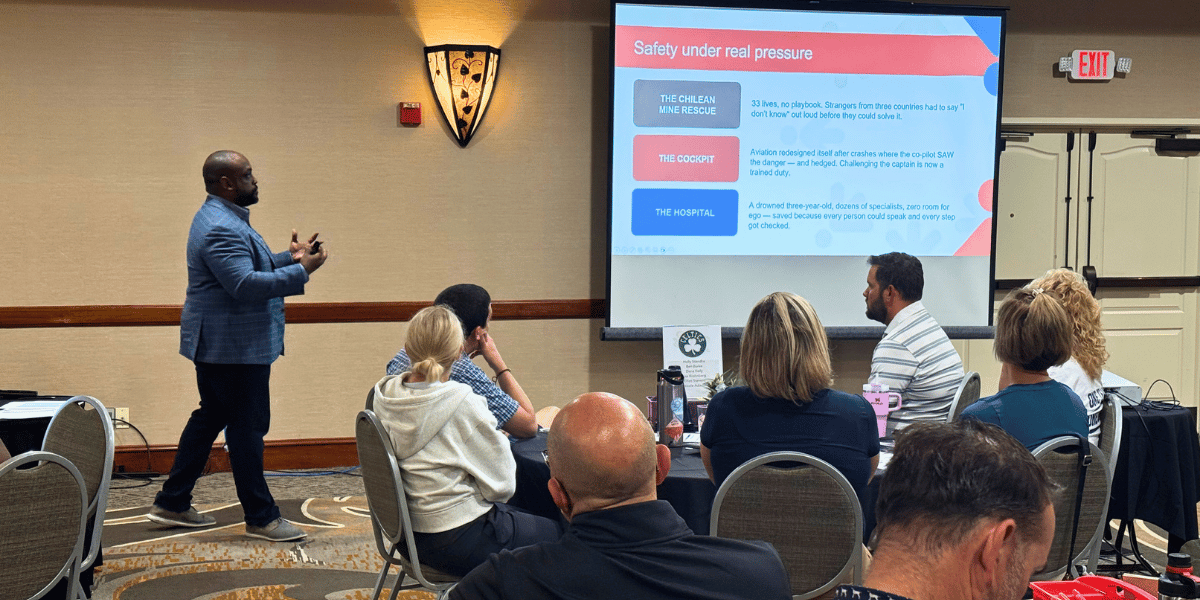
Across four school years, Lakeville Area Schools brought Nucleo Coaching in to work directly with the leaders carrying the district's daily weight — principals, assistant principals, and the teams around them. Forty-plus workshops and more than a hundred hours of one-to-one coaching, all built on one idea: when building leaders are genuinely well-coached, that steadiness reaches every classroom underneath them.
This is what school leadership coaching looks like when a district commits to it for the long haul, not just a single professional development day.
| Client | Lakeville Area Schools, Independent School District 194 — Lakeville, Minnesota |
| District profile | 12,000+ PK–12 students across Dakota and Scott counties · nine elementary schools, three middle schools, two comprehensive high schools |
| Engagement | 2018–2022 · four school years |
| Scope | 40+ workshops delivered · 100+ hours of one-to-one leadership coaching |
| Services | Leadership workshops · one-to-one coaching · team coaching and facilitation · assessment-based development |
| Method | Awareness to Action Coaching |
A fast-growing district, a familiar kind of pressure
Lakeville is one of the fastest-growing districts in Minnesota, and growth puts a particular kind of pressure on building leaders. Enrollment shifts, boundary changes, staffing decisions, and community expectations all land on the same small group of people — principals and their leadership teams — who are also expected to hold building culture together while doing it.
Districts invest generously in professional development, and Lakeville is no exception. What building leaders were asking for was something different in kind: a place to think out loud, get honest reflection on how they were actually showing up, and turn that into decisions they could make on Monday morning. That is coaching, and it is a different discipline from training.
What Lakeville needed from school leadership coaching
- Give principals and assistant principals dedicated space for reflection during the parts of the year when their calendars leave none.
- Build shared leadership language across a building leadership team so that feedback, delegation, and hard conversations stop depending on individual personality.
- Convert self-awareness into observable behavior change — the kind staff notice without being told to look for it.
- Support leaders through the specific pressures of a growing district: staffing decisions, boundary transitions, and holding building culture steady through change.
Inside the approach: the Awareness to Action spine
All Nucleo work runs on Awareness to Action Coaching, a five-stage spine that moves a leader from noticing a pattern to running it as a repeatable practice. Each stage has its own tools, and each one ends with something the leader does rather than something they learned.
How that showed up in Lakeville
- Awareness. Leaders built an evidence file of their own patterns — what they actually did in the last ten hard conversations, rather than what they believe they do.
- Mindset. We examined the assumptions underneath recurring frustrations, including the beliefs about control and visibility that make delegation feel risky to a building leader.
- Mindsight. Leaders practiced reading the room accurately: what a department chair is signaling in a staff meeting, what silence in a leadership team actually means.
- Behavior. Each leader wrote a From-To — one behavior to move, stated plainly enough that a colleague could tell whether it happened.
- Action. Behavioral experiments with a defined condition, duration, and signal. Standing options included Speak Third (hold your view until two others have spoken), One Handed-Off Decision, and The Friday Ledger.
What changed
Leaders rated the work highly, year over year. Workshops averaged 4.8 out of 5 across four school years. Coaching averaged 4.7 out of 5, a 93% satisfaction rating, from leaders who had the same coach long enough to be honest about it.
The measures we tracked moved, too. Across the indicators followed during the partnership — participant-reported confidence, team effectiveness, and communication quality — results improved by roughly 5 to 10 percent between the start and close of engagements.
Roughly 25 leaders completed a Leadership Circle Profile with a 90-minute debrief, and about 20 team sessions used the Myers-Briggs Type Indicator to build shared language across a building's leadership team.
"His MBTI session helped us understand ourselves and each other in a way that transformed how we communicate and collaborate."
Working with Tony Joseph of Nucleo Coaching has been a fantastic experience for our staff. Tony made the session engaging and easy to connect with, breaking down the MBTI framework into practical insights we could use immediately. Staff members walked away with a better understanding of their strengths and how to work more effectively as a team. Since that session, we've seen real improvements in trust, collaboration, and problem-solving. Tony's guidance gave us tools to address challenges openly and build stronger relationships. I'd highly recommend him to any team looking to grow together and create a positive impact.
Paul Helberg · Principal, Cherry View Elementary
More stories like this live on our Testimonials page.
| Leadership workshops | More than 40 workshops for building leadership teams across four school years, designed around the situations those leaders were actually facing that semester. |
| One-to-one coaching | 100+ hours of confidential coaching for principals and assistant principals, anchored to a written development focus each leader owned. |
| Team coaching & facilitation | Facilitated sessions to build shared language and working agreements inside building leadership teams. |
| Leadership Circle Profile | Approximately 25 profiles, each followed by a 90-minute deep debrief on the leader's reactive tendencies, creative competencies, and growth areas. |
| MBTI team sessions | Approximately 20 sessions delivered as team coaching, using type to give staff a shared, practical language for working together. |
Why it worked
- Practitioner credibility. This coaching comes from someone who runs talent management inside a global organization every day. School leaders can tell the difference between someone who has led through pressure and someone who has read about it.
- Built for a school calendar. Sessions were designed around the rhythms leaders actually live — the first weeks of school, the February stretch, the spring staffing window.
- Small, repeatable reps. The unit of change was one behavior a leader could practice this week, which is why the work survived contact with a principal's calendar.
- Confidentiality that held. Building leaders talked openly because the coaching room stayed the coaching room.

What a partnership like this could look like for your district
The natural extension of building-level coaching is a district-level cohort — a peer group of principals developing in the same language at the same time, which is where district-wide culture change actually starts. A typical district partnership includes:
- A cohort of eight to twelve building leaders meeting across the school year, developing in shared language and holding each other to it.
- One-to-one coaching for each cohort member, so the group work has somewhere private to land.
- Assessment-anchored development plans that give every leader a written focus and a way to tell whether it moved.
Nucleo Coaching is led by Tony Joseph, a U.S. Air Force veteran and certified executive coach who previously served as Director of Talent Management at Medtronic.
If your district is carrying similar pressure on its building leaders, a Leadership Reset session is a good place to start.